
Baking good bread is not as easy as it sounds.
Treats from Oma’s Oven was founded with the goal of baking cakes and giving people blissful moments of enjoyment while eating the cakes I make. I had no idea that bread could have the same effect until I shared mine with our friends. Many people encouraged me to also sell the sourdough bread I make, and one day I was brave enough to try.
My path to sourdough bread did not start like it did for so many others during the 2020 lockdown, when we all had been trapped at home. Instead, I started experimenting with sourdough in June 2023. A few months earlier, somewhere around mid-February, I came across a bakery called Hewn Bakery in Evanston, IL. They just opened a second location, on the main street in Libertyville in January and that’s where I found them. Their bread is extremely good. I live with my family in Vernon Hills and until then I believed it was not possible to bake bread with a taste and texture this close to the breads I knew from Germany. Breads made from flour other than white wheat, a little darker and with a real crust, and the best, without any sugar. So far, I assumed that with the flour available in the US I could only bake sandwich loaves, but the bakers from Hewn bread opened an entire new world for me.
Flour: local, organic, stone-ground

The flour available here in the US is very different from the flour in Germany. Even among European countries does flour not equal flour. Mills in Europe don’t necessarily grind the entire grain, and the flour from the same grain is distinguished in types and each type has a specific number. The number comes from the ash content. If you think the metric system is complicated, don’t try to understand German flour.
What Does the “Ash Content” of Flour Mean? – The Baking Network
As mentioned, I started to learn more about flour, I talked to other people who make their own bread, and I was reading a lot about flour during winter 2022-23. One person recommended Janie’s Mill, IL to me. They stone-grind flour from locally (IL) grown grains and ship them to your doorstep. Later I discovered in a book “Heritage Baking” by Ellen King, one owner of the Hewn Bakery, that they also purchase flour from Janie’s Mill, IL. I was excited and thought I had found the key to great bread.
Sourdough

Little did I know about my next hurdle, Sourdough. I never raised one, and never baked anything before with sourdough. Who knew that understanding sourdough and becoming friends with it would be such a rocky road. Now I know why so many people give their sourdoughs names, I learned to observe and read the sourdough, I learned how to influence the stages of its life cycle and how it should look and smell to make airy and delicious loaves of bread. Still, as soon as I thought I had it all figured out, I experienced a setback and had to go back to first base and read up again and learn. First, I needed to find a recipe I wanted to try, then I learned about the sourdough and the feeding and maintaining, after that I tried the recipe and practiced getting the perfect loaf. However, I’ve had only so little experience with sourdough and didn’t know what I needed to look out for, so it was very difficult to understand at what step in the recipe I was off track. I wanted to get my bread with bigger air bubbles, so I used more levain, reducing the flour and water from the recipe by the amount of levain I added. I also started with substituting wheat flour for rye flour and without knowing then, I created more issues. Even though I knew a lot about flour at this point, I was not aware of how important the protein content is for gluten development. Somehow, I still made mostly edible results. I even gave away some loaves to friends and coworkers because we could not eat all the bread I made. Then people started to encourage me to sell not just cakes but also bread in my newly founded cottage bakery, and when I started to investigate recipes for bigger batches, and started baking, it all spiraled south. I was so frustrated, for the first time I had flat bread, but not because I made focaccia or pita bread, no because everything was off. My sourdough, the flour I used, the time schedule on dough day, everything. I took a break. I kept maintaining my sourdough, but I stopped making bread entirely. I was so frustrated with everything, with me, with the sourdough, with the recipe, just everything.
My low point – also called flat bread.


I hit rock-bottom, and when that happens, I start researching, and doing. So, I came across an eBook from an Australian author. Her name is Mary-Jane Stubbs and the title of the book is “The Sourdough Solution”. First, I read the book from beginning to end, and next reread chapters important for the issue I had.
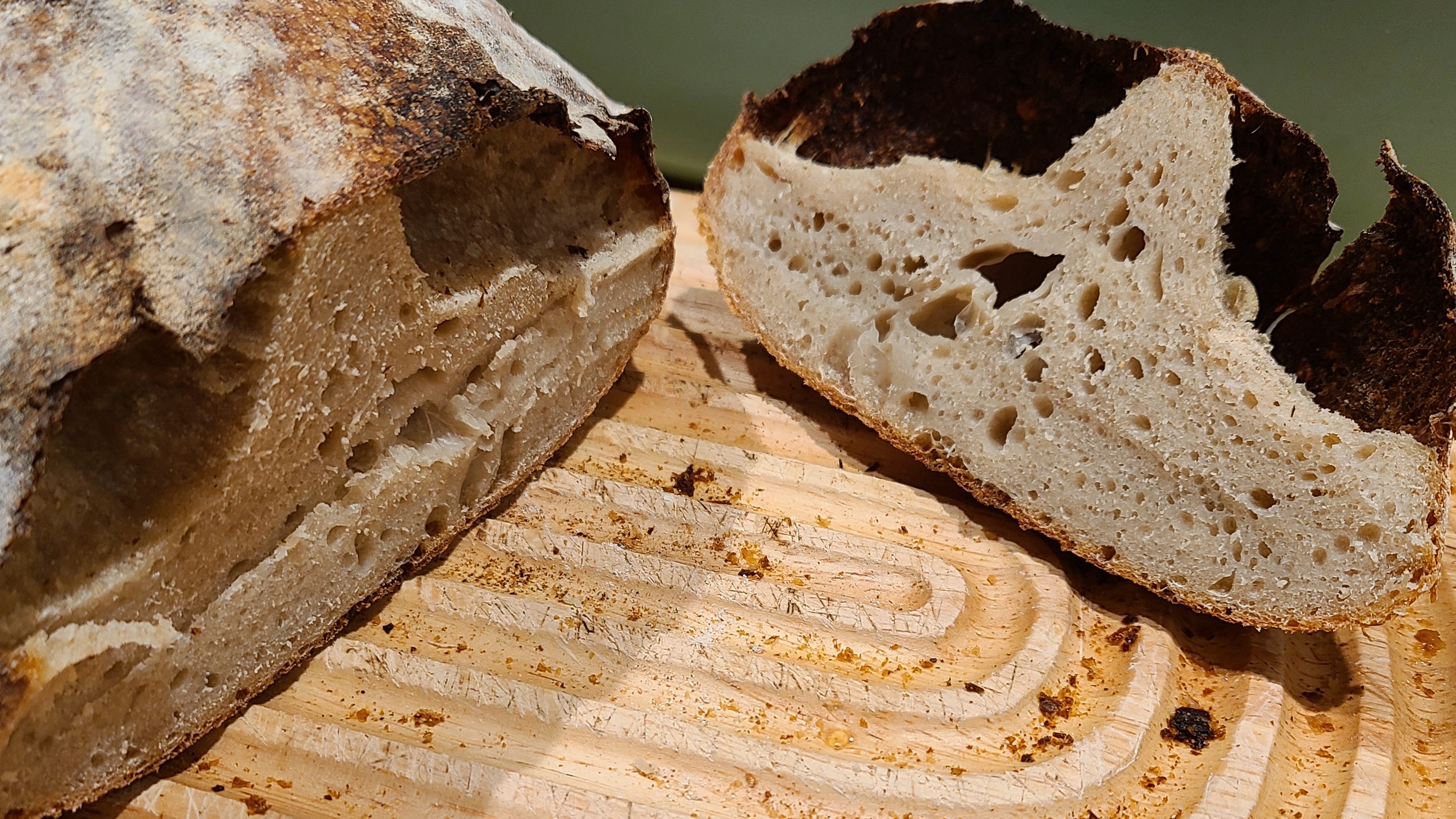
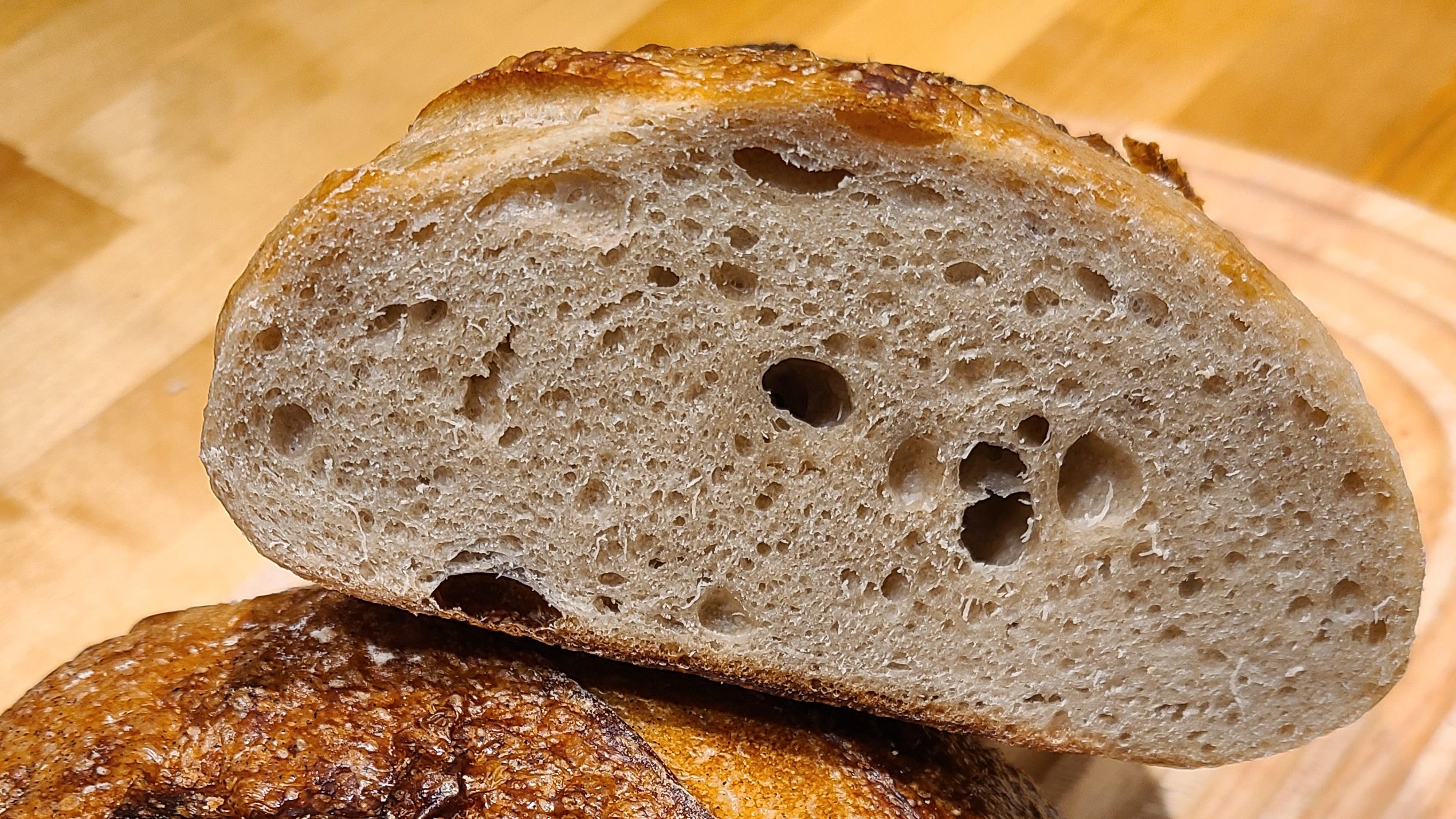
I always revisited the book when some new issue with my bread baking occurred. My biggest takeaway so far was: “Your bread will look and behave as your starter does, at the time when you use it.” This means, when I use a starter or in the next step the levain while it is not at its peak but over or under proofed the bread result will end up the same, no matter how long or short your bread dough will prove. However, it does not work the other way around, if your sourdough and levain will both have been perfectly at peak when you used them, but if you are not as good in reading the dough and determine if it has risen enough you will produce under or over proofed bread. So, my takeaway from Mary-Jane’s eBook “The Sourdough Solution” was: “It is important to watch your sourdough more than the clock and the time schedule of the recipe.
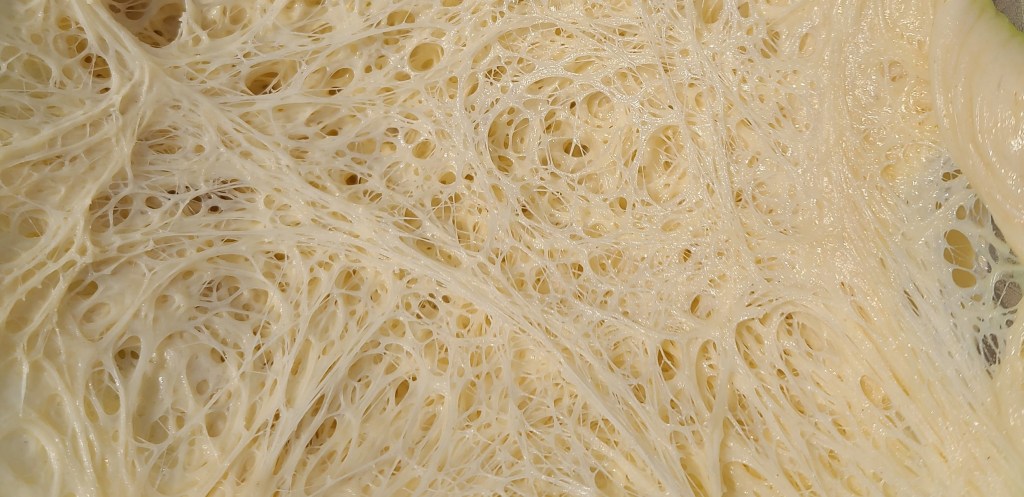
Time guides are estimates the simply help you plan.” This was the key to my biggest problem at that time. As soon as I started to watch the dough in each step and observe in which life cycle it currently was, and most importantly to see my sourdough as my friend instead of an enemy, we started to create the most beautiful crumb. Of course, not every time I bake but the bread comes out in a pretty stable quality now.
Gluten free
Occasionally, I’m asked if I offer now, or if I plan to offer, gluten-free goods later. The short answer is no.
I understand the desire to freely eat food we like, and know how aggravating it is when options are restricted for oneself. Because of that, I would like to give a longer respectful answer.
I’m a self-taught baker and I was a nurse until a decade ago (I’m still a nurse by heart), I take food sensitivities and allergies very seriously and I’m not able to avoid cross contamination in my kitchen. This means that if I bake gluten-free items there is a risk that non-gluten-free flour can be mixed in.
Another reason why I can’t offer gluten-free breads and cakes is my lack of experience. It took me about 9 months to figure out how to develop strong gluten for breads with an open and even crumb and my sourdough studies are not finished yet, also I have never really looked into the products to replace gluten in baked goods. Therefore, I would rather leave gluten-free baking to people that are better equipped for it.

I have the biggest respect for all professional trades and understand why being a baker is a craftsmanship and people study all there is around baking. I’m just a self-taught baker and not perfect yet but quality and taste of my breads is at a good level to sell. All customers are very appreciative and full of praise.
 Treats from Oma’s Oven
Leave a comment